Behind The Scenes: Inside UNIFIED Technology Centers Across San Diego + Imperial Counties
Discover how individualized technology education, compassionate coaching, and meaningful social connections are helping individuals with intellectual and developmental disabilities build confidence, friendships, and real-world skills.

What Is a UNIFIED Technology Center?
At UNIFIED Esports League (UESL), we believe technology can be more than entertainment. It can be a gateway to connection, confidence, independence, and personal growth.
Our UNIFIED Technology + Life Skills Program provides social and emotional growth opportunities for individuals with intellectual and/or developmental disabilities (IDD), ages 8 through adulthood.
Through gaming, technology education, individualized learning plans, and compassionate coaching, we help clients work toward meaningful personal goals in safe, supportive environments.
The concept is simple: use technology clients enjoy to help them practice skills that matter beyond the screen.
Inside our UNIFIED Technology Centers, clients explore gaming consoles, virtual reality, computers, creative technology, and interactive educational experiences alongside peers and IDD-trained coaches.
But the technology is only part of the experience.
Every activity creates opportunities to practice communication, teamwork, emotional regulation, problem-solving, independence, and friendship-building.
A client who begins by learning how to participate in a multiplayer game may gradually develop the confidence to introduce themselves to someone new. Another might discover a passion for graphic design, learn to navigate unfamiliar software, or practice managing frustration when something doesn't go as planned.
These moments represent the heart of our mission.
At UNIFIED, we aren't simply teaching people how to play games. We're creating opportunities to learn, connect, and grow.
More Than a Gaming Center: A Community Built for Belonging
For many individuals with intellectual and developmental disabilities, finding accessible social opportunities that reflect their interests, abilities, and personal goals can be challenging.
Traditional recreational environments may not always provide the individualized guidance, predictable routines, or supportive social structure that some individuals need to participate comfortably.
UNIFIED Technology Centers are designed to help address that gap.
Our centers bring together clients with different personalities, communication styles, abilities, and interests in environments where participation is encouraged, differences are respected, and progress is personal.
Some clients arrive eager to make friends. Others may prefer to observe before participating. Some are experienced gamers, while others have never used a gaming console or virtual reality headset.
There is no single definition of success.
For one client, progress might mean confidently asking a peer to join a game. For another, it could mean following a multistep instruction, practicing patience, or learning to communicate a need independently.
Every individual deserves opportunities to participate, contribute, and feel that they belong.
Our coaches help create those opportunities through structured activities, consistent encouragement, and personalized support.
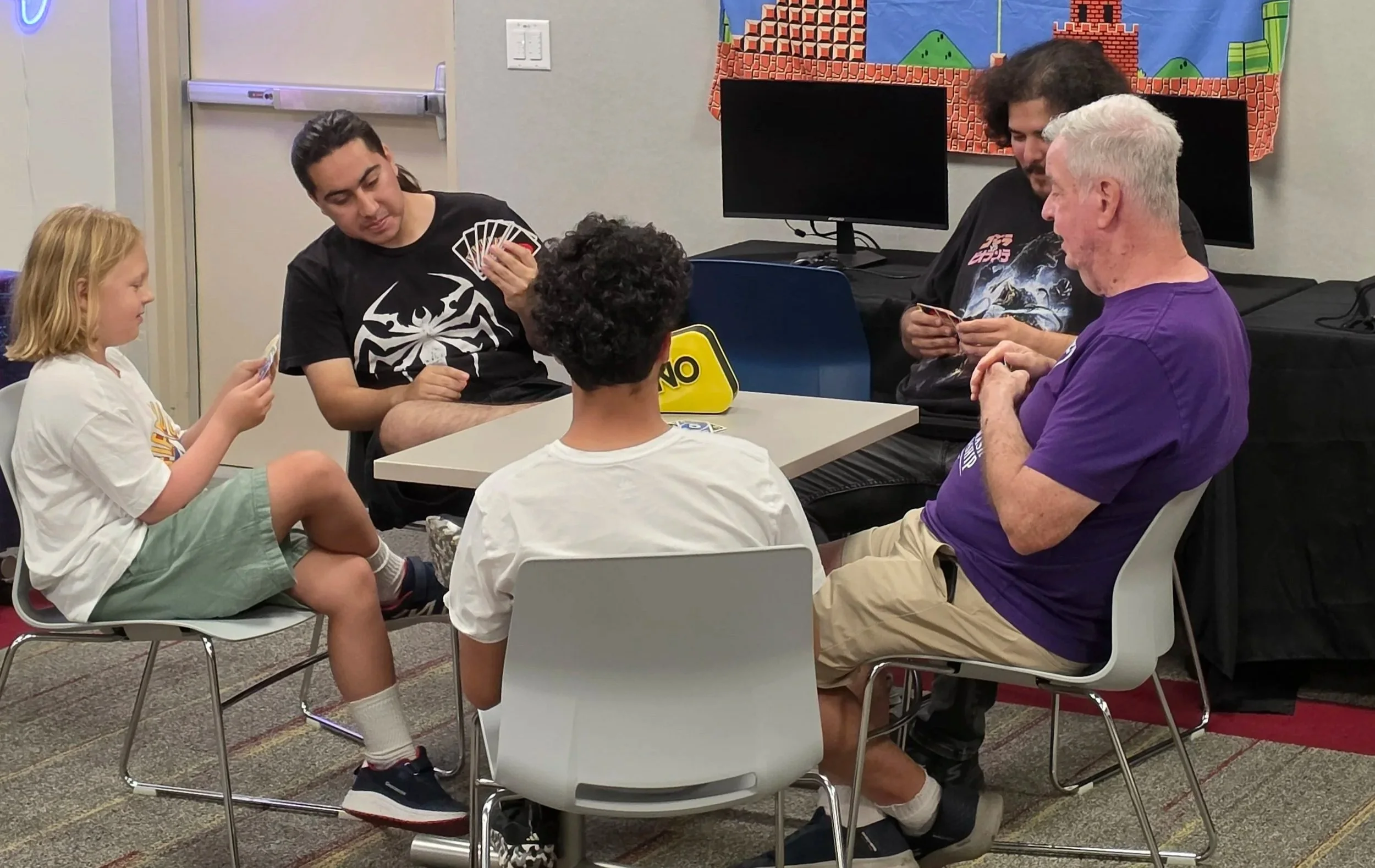
Find Your Community: UNIFIED Technology Centers in San Diego + Imperial Counties
Accessibility matters.
A meaningful program can only make a difference when families can realistically access it. Transportation, geographic distance, scheduling, and the availability of appropriate support can all influence participation.
That's why UESL works with schools, educational institutions, and community organizations—our Location Partners—to bring UNIFIED Technology Centers into communities throughout San Diego and Imperial Counties.
Rather than expecting every family to travel to one centralized facility, our growing network creates more opportunities for individuals with IDD to access technology education, social experiences, and individualized coaching closer to home.
Each center follows the UNIFIED program model while serving its surrounding community.
Poway UNIFIED Technology Center
Location Partner: Abraxas High School - Poway, California
Our Poway Technology Center is a flagship location within the UNIFIED network.
Here, clients participate in collaborative gaming, technology exploration, coach-supported social activities, and opportunities to practice essential life skills.
The Poway community has also demonstrated how shared goals can bring clients together.
Through the UNIFIED Player Points System, clients can earn recognition for positive participation, sportsmanship, helping others, attendance, and community involvement.
When clients work toward a collective reward, they have opportunities to practice encouragement, cooperation, and shared responsibility.
A pizza celebration might seem like a small reward, but the learning opportunities leading up to it can be meaningful.
Clients experience what it means to contribute to a team, celebrate others' achievements, and recognize that individual actions can support a shared goal.
Rancho Bernardo UNIFIED Technology Center
Location Partner: Rancho Bernardo High School - Rancho Bernardo, California
Our Rancho Bernardo Technology Center brings supportive technology education to families throughout the northern San Diego community.
Clients can explore their interests while participating in structured activities that encourage communication, teamwork, and personal development.
For families seeking an IDD program in the Rancho Bernardo area, UNIFIED provides an opportunity to combine engaging technology experiences with individualized goals and consistent coaching.
San Marcos UNIFIED Technology Center
Location Partner: TERI Campus of Life - San Marcos, California
Located at TERI Campus of Life, our San Marcos center offers clients opportunities to explore technology, connect with peers, and build confidence in a supportive environment.
The center reflects the importance of creating spaces where individuals with diverse abilities can participate meaningfully.
Whether a client is developing computer skills, practicing collaboration, or exploring a new interest, activities are approached as opportunities for learning and personal growth.
Ramona UNIFIED Technology Center
Location Partner: Ramona High School - Ramona, California
For families in Ramona and surrounding inland communities, geographic access to specialized programs can be especially important.
Our Ramona Technology Center brings the UNIFIED model into the local community, providing opportunities for individuals with IDD to engage in technology education, build friendships, and receive individualized coaching.
Clients can explore interactive technology, participate in group activities, and develop social and emotional skills within a supportive setting.
San Ysidro UNIFIED Technology Center
Location Partner: San Ysidro Middle School - San Ysidro, California
Our San Ysidro center serves families in southern San Diego County, offering opportunities for technology exploration, meaningful peer interaction, and individualized skill development.
This center also illustrates an important part of the UNIFIED mission: creating environments where clients feel safe enough to express themselves.
For some individuals, building confidence begins with simply feeling comfortable participating.
Over time, consistent support and positive social experiences can create opportunities for clients to communicate more openly, initiate interactions, and develop relationships with peers.
These everyday experiences can be important steps toward broader personal goals.
El Cajon UNIFIED Technology Center
Location Partner: St. Madeleine Sophie's Center - El Cajon, California
Our El Cajon Technology Center offers clients opportunities to participate in collaborative gaming, technology education, and structured social experiences.
Through individualized guidance and group activities, clients practice skills such as communication, problem-solving, flexibility, and teamwork.
The program provides opportunities to recognize personal strengths, celebrate achievements, and contribute positively to a shared community.
El Centro UNIFIED Technology Center
Location Partner: Booker T. Washington Elementary School, El Centro, California
Our El Centro Technology Center marks an important step in expanding UNIFIED services into Imperial County.
For families seeking IDD services, special needs programs, and supportive technology education in El Centro and surrounding communities, local access can make participation more practical.
Clients have opportunities to explore gaming and technology while practicing social interaction, communication, and real-world skills with guidance from trained coaches.
Expanding into Imperial County reflects our commitment to making inclusive technology education accessible to more individuals and families.
COMING SOON!
Carlsbad UNIFIED Technology Center
Location Partner: MiraCosta College Career Technical Institute - Carlsbad, California
Del Mar UNIFIED Technology Center
Location Partner: Winston School - Del Mar, California
One Program. Multiple Communities. Individualized Opportunities.
Although each UNIFIED Technology Center serves a different community, every location shares the same fundamental purpose:
To create opportunities for individuals with IDD to build confidence, friendships, and real-world skills through technology and meaningful connection.
Program schedules, enrollment availability, and technology offerings may vary by location.
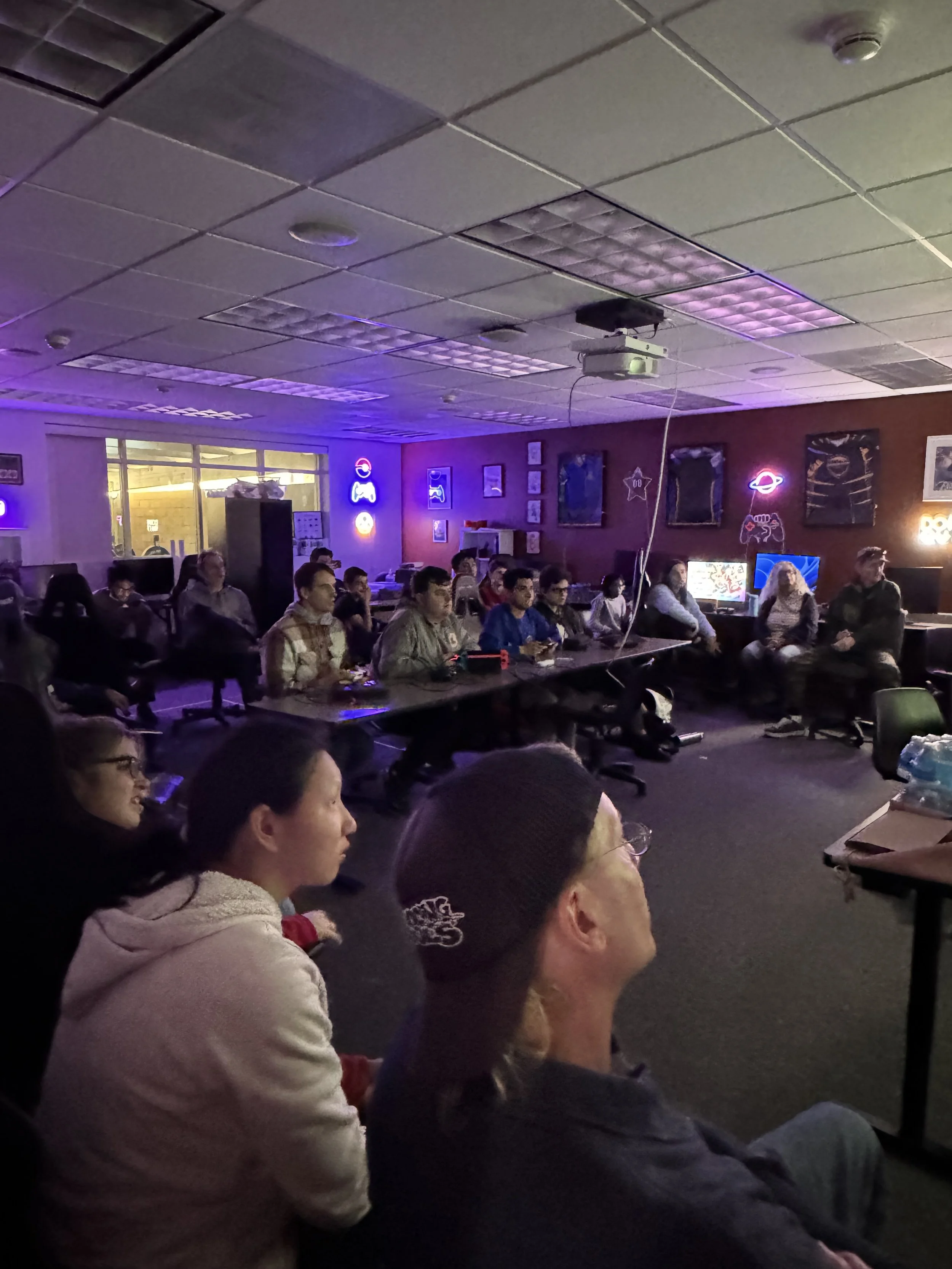
What Happens Inside a UNIFIED Technology Center?
UNIFIED programs are intentionally structured to balance learning, exploration, social engagement, and personal well-being.
Rather than simply providing unrestricted gaming time, our approach incorporates individualized goals, technology-based activities, coaching, and opportunities to reflect on progress.
A Day in the Life of a UNIFIED Client
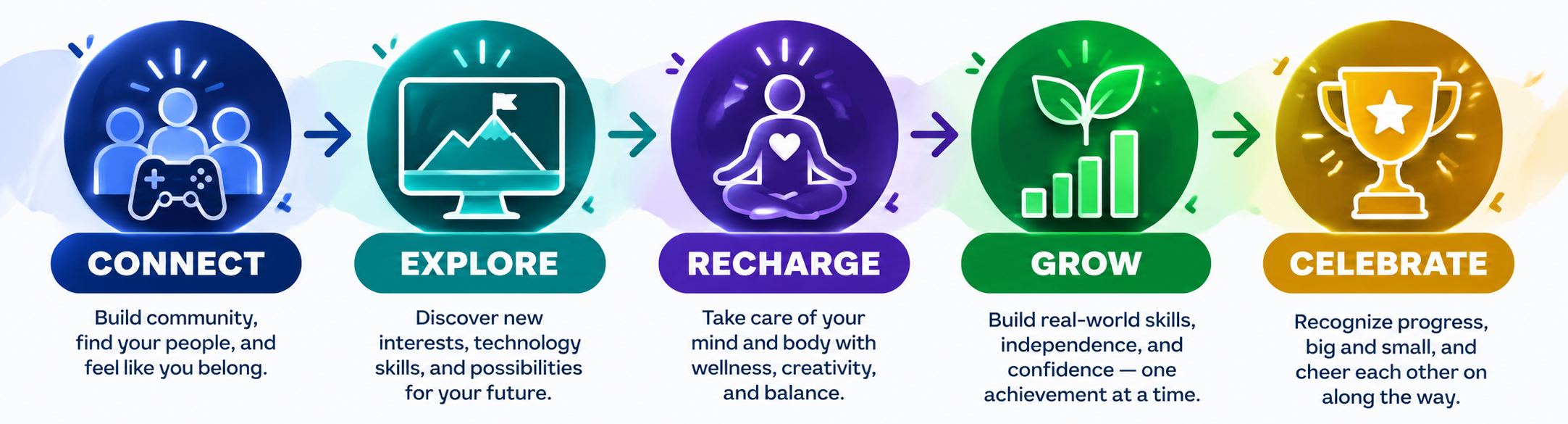
Our daily program follows five interconnected stages.
1. CONNECT — Building Community
Clients begin by connecting with coaches and peers.
This might include greeting others, checking in, discussing interests, or preparing for the day's activities.
These interactions create opportunities to practice communication, social awareness, and participation.
2. EXPLORE — Technology + Skill Development
Clients engage with technology and activities selected to support their interests and learning goals.
Depending on the location and activity, experiences may include gaming consoles, computers, virtual reality, simulation technology, graphic design, or creative digital projects.
Coaches guide participation and encourage clients to approach challenges, collaborate, and develop new skills.
3. RECHARGE — Healthy Gamer Breaks
Healthy participation includes knowing when to take a break.
Our Healthy Gamer approach incorporates scheduled 20-minute breaks that give clients opportunities to step away from screens, reset, and participate in other activities.
These breaks can create opportunities to practice recognizing personal needs, transitioning between activities, and developing balanced technology habits.
4. GROW — Social + Emotional Learning
Learning extends beyond the technology itself.
Coaches help clients recognize and practice skills such as patience, teamwork, communication, sportsmanship, conflict resolution, and emotional regulation.
These skills can be introduced during activities and reinforced through supportive conversations and real-time coaching.
5. CELEBRATE — Recognizing Progress
Every step forward deserves recognition.
Coaches acknowledge effort, participation, positive social interactions, and personal achievements.
Celebrating progress helps reinforce the message that growth is not limited to winning a game or completing a task perfectly.
Sometimes, success means trying again.
Technology Education With a Purpose: The Tools We Use + Why They Matter
Technology is most meaningful when it supports learning, exploration, and participation.
At UNIFIED, we use different technologies to create opportunities for clients to practice skills connected to their individual goals.
Gaming Consoles: Collaboration + Communication
Gaming platforms such as Nintendo Switch, PlayStation, and Xbox can provide engaging opportunities for cooperative learning.
Multiplayer games encourage clients to communicate, make decisions, take turns, negotiate roles, and respond to unexpected situations.
For example, a cooperative game like Overcooked! 2 requires players to coordinate tasks and work together toward a shared objective.
With appropriate coaching, this can create opportunities to practice teamwork, flexible thinking, and problem-solving.
The learning doesn't come from the game alone. It comes from how the activity is structured, supported, and connected to meaningful goals.
Virtual Reality: Learning Through Immersive Experiences
Virtual reality allows users to explore simulated environments and interact with digital experiences in new ways.
For individuals with IDD, appropriately selected virtual environments may provide opportunities to practice certain skills in controlled settings.
Depending on the activity and the individual's needs, VR experiences may support spatial awareness, decision-making, task sequencing, and exploration.
Coaches consider comfort, accessibility, and individual readiness when introducing immersive technology.
Computers + Digital Literacy: Building Confidence With Technology
Computer-based activities introduce opportunities to practice skills that are increasingly relevant in everyday life.
These may include navigating digital interfaces, using a keyboard and mouse, following instructions, exploring software, and completing multistep tasks.
For clients who are interested in digital creativity or technology-related activities, computer education can also help develop confidence and curiosity.
Graphic Design + Digital Creativity: Exploring Personal Expression
Creative technology allows clients to explore their ideas and interests through visual projects.
Digital design activities can involve making choices, organizing information, following steps, and expressing personal preferences.
These experiences can encourage creativity, self-expression, and persistence while introducing practical digital tools.
Roblox Studio + Coding: Understanding How Technology Works
For interested clients, platforms such as Roblox Studio can introduce concepts related to digital creation, design, logic, and problem-solving.
Rather than only interacting with finished digital experiences, clients may have opportunities to explore how those experiences are created.
Activities can be adapted to different levels of familiarity and ability.
Racing + Flight Simulators: Interactive Problem-Solving
Simulation technology offers engaging opportunities to practice attention, coordination, decision-making, and responding to feedback.
Clients may explore cause-and-effect relationships and practice adjusting their actions in response to changing situations.
As with other technologies, the educational value depends on thoughtful activity selection, individualized support, and opportunities to reflect on the experience.
The goal is never to use technology simply because it is exciting. The goal is to make technology a meaningful part of each client's learning experience.

What Does Research Say About Technology Education for Individuals With IDD?
Research increasingly suggests that thoughtfully designed digital learning experiences may offer meaningful opportunities for individuals with intellectual and developmental disabilities.
However, technology is not a universal solution, and not every game or digital experience produces the same benefits.
The strongest approach considers the individual's needs, the learning objective, the technology being used, and the support provided during participation.
#1: Virtual Reality + Functional Skills
A 2026 systematic review by Bouck, Norwine, and Liu examined research on virtual reality as a tool for teaching life skills to students with intellectual and developmental disabilities.
The researchers identified ten relevant studies and found that four met their methodological quality standards.
Together, those higher-quality studies suggested that virtual reality may be a promising evidence-based approach for teaching certain life skills to students with IDD.
This is encouraging, but the authors also highlighted the importance of research quality when determining which approaches are supported by evidence.
What this means for UNIFIED: Technology-based activities can be selected with specific learning goals in mind, while coaches provide individualized guidance and opportunities to connect the experience with practical skills.
Source: Bouck, E. C., Norwine, L., & Liu, E. (2026). Virtual Reality and Life Skills: A Systematic Review of the Literature for Students With Intellectual and Developmental Disabilities. Journal of Special Education Technology.
#2: Virtual Reality + Accessibility
A 2024 systematic review published in HERD: Health Environments Research & Design Journal examined 27 studies involving 868 participants.
Researchers explored virtual reality interventions for people with intellectual and developmental disabilities, including considerations related to safety, usability, and accessibility.
Their findings suggested promising applications across physical, cognitive, emotional, and functional domains.
Importantly, the researchers emphasized that effective experiences must account for individual abilities, comfort, and safety.
What this means for UNIFIED: Technology education should never be one-size-fits-all. Individualized guidance, appropriate activities, and supportive environments are essential considerations when introducing immersive experiences.
Source: Yi, Y. J., et al. (2024). Design Considerations for Virtual Reality Intervention for People with Intellectual and Developmental Disabilities: A Systematic Review.
#3: Educational Gaming + Social Skills
A 2024 systematic review published in Neuroscience & Biobehavioral Reviews examined 26 studies of serious games designed to support social skills among autistic individuals.
Of those studies, 22 reported at least one statistically significant improvement in the outcomes measured.
Although the results are encouraging, they do not mean that every game improves social skills or that findings from autism-focused research automatically apply to every individual with IDD.
The research supports continued exploration of thoughtfully designed gaming experiences as one possible tool for social learning.
What this means for UNIFIED: Gaming activities can create structured opportunities to practice communication, collaboration, and social problem-solving, particularly when coaches help clients apply those skills during real interactions.
Source: Azadboni, T. T., et al. (2024). Effectiveness of Serious Games in Social Skills Training to Autistic Individuals: A Systematic Review. Neuroscience & Biobehavioral Reviews.
The Most Important Takeaway
Research helps inform how technology can be used, but meaningful education requires more than equipment.
It requires clear goals, appropriate support, consistent participation, and opportunities to apply what is learned.
At UNIFIED, technology serves as an engaging foundation for these experiences.
Our coaches help clients connect the activity in front of them with skills that can matter in everyday life.
Individualized Education: Every Client Has Their Own Goals
No two individuals with intellectual or developmental disabilities have identical interests, abilities, support needs, or aspirations.
That's why personalization is central to the UNIFIED approach.
What Is an Individualized Technology Education Plan (ITEP)?
Each client's Individualized Technology Education Plan, or ITEP, provides a framework for identifying meaningful goals and selecting appropriate learning opportunities.
Rather than expecting every client to complete the same activities in the same way, the ITEP helps connect technology experiences with individual areas of development.
Goals may relate to:
Social interaction and friendship-building
Communication and self-expression
Emotional awareness and regulation
Teamwork and sportsmanship
Problem-solving and decision-making
Following instructions and completing tasks
Digital literacy and technology exploration
Confidence and independent participation
An ITEP helps coaches understand what progress may look like for a particular client.
For example, one client's goal may involve initiating conversations with peers.
A coach might support this goal by encouraging the client to invite someone into a multiplayer game, ask a question, or participate in a collaborative activity.
Another client's goal might focus on task completion.
That client could practice following a sequence of instructions during a computer-based project or technology activity.
The experience is engaging, but the objective extends beyond the activity itself.
Compassionate Coaching + Individualized Attention
UESL maintains a 1:3 coach-to-client ratio.
This allows coaches to provide more individualized guidance while supporting participation in group activities.
Our IDD-trained coaches help clients navigate challenges, recognize progress, and build confidence through consistent encouragement.
Coaching may include modeling communication, providing prompts, supporting transitions, adapting activities, and reinforcing positive participation.
The goal is not to do everything for the client.
It is to provide the support needed for each individual to participate, learn, and develop greater confidence in their own abilities.
Tracking Progress + Keeping Families Connected
Growth is often gradual. A client may practice the same skill repeatedly before feeling confident using it independently. That is why consistency, observation, and documentation are important parts of the UNIFIED program.
UESL provides bi-monthly progress reports to help families understand how clients are participating and progressing toward their goals. These reports create opportunities to recognize achievements, identify areas requiring continued support, and maintain communication between families and the program.
Progress is not always dramatic.
Sometimes, the most meaningful changes are the ones that happen little by little.
A new friendship. An independently completed task. A calmer response to frustration. A willingness to try something unfamiliar.
At UNIFIED, progress looks different for everyone—and every meaningful step matters.
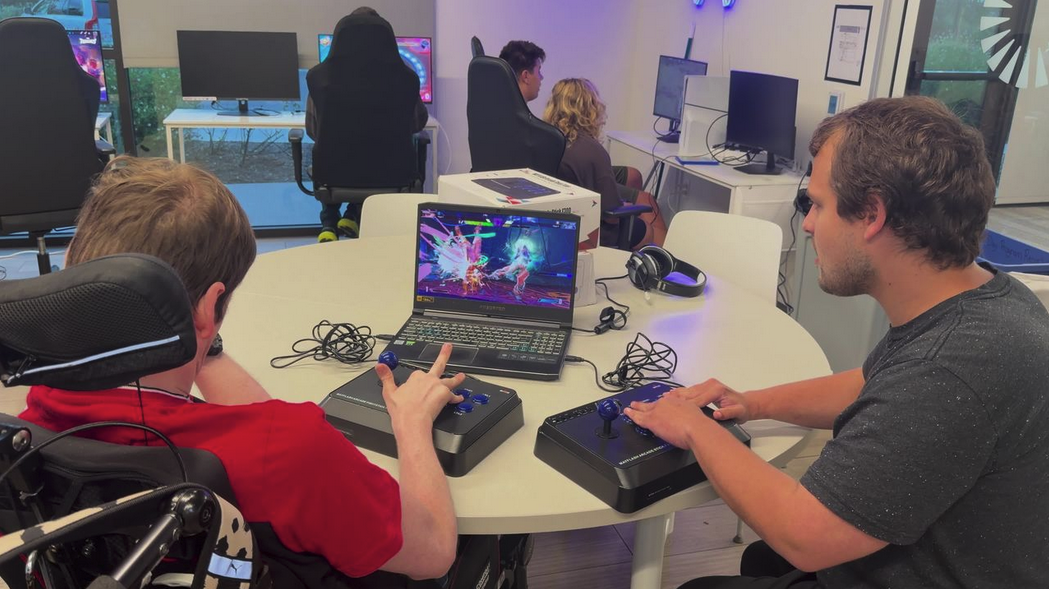
Why Consistency Matters: Building Skills Through Routine + Repetition
Learning new skills often takes time, practice, and opportunities to apply what has been learned.
Consistent participation gives clients opportunities to become familiar with their environment, develop relationships, revisit learning objectives, and build confidence through repeated experiences. Predictable routines may also help clients understand what to expect and prepare for transitions between activities.
At UNIFIED, clients maintain a permanent schedule of three to five days per week. The minimum enrollment requirement is three permanent days each week. This structure supports consistent participation and provides coaches with adequate opportunities to observe, guide, and document progress.
For families, it also establishes a reliable routine. Rather than treating technology education as an occasional recreational activity, UNIFIED incorporates it into an ongoing learning experience.
Consistency creates opportunities for small steps to become meaningful progress over time.
Supporting Social + Emotional Well-Being Through Connection
Well-being is about more than physical health. For individuals with IDD, opportunities to build relationships, explore interests, participate in meaningful activities, and feel included can contribute to a fulfilling life.
UNIFIED Technology Centers aim to support these experiences through positive peer interactions and supportive coaching.
Building Friendships
Shared interests can create natural opportunities for connection.
Two clients who enjoy the same game may discover common ground before they feel comfortable having a longer conversation. A cooperative activity may encourage a client to ask for help, offer encouragement, or celebrate someone else's achievement.
Over time, repeated positive interactions can create opportunities for friendships to develop.
Practicing Emotional Regulation
Games and technology activities sometimes involve frustration, unexpected changes, or challenges that require patience.
With supportive coaching, these moments can become opportunities to practice recognizing emotions, asking for assistance, taking breaks, and trying different approaches.
Developing Confidence
Confidence can grow through repeated opportunities to participate successfully.
For some clients, this may mean learning a new technology skill. For others, it may mean joining a group activity, expressing a preference, or speaking up when they need support.
Encouraging Healthy Technology Habits
Technology can be engaging, but balanced participation matters.
Our Healthy Gamer breaks provide scheduled opportunities to step away from screens and practice transitions, self-awareness, and other activities. These practices are intended to support a balanced approach to technology participation rather than treating screen time as an unlimited activity.
Creating a Sense of Belonging
Perhaps most importantly, our centers provide opportunities for clients to be part of a community.
A place where they are recognized.
A place where their interests matter.
A place where coaches and peers can celebrate their achievements.
A place where they can explore who they are and what they enjoy.
For many families, finding a community like this is just as meaningful as finding an educational program.
How to Enroll in a UNIFIED Technology Center
Finding the right program can feel overwhelming, especially when families are navigating services, schedules, eligibility requirements, and funding.
UESL's Concierge Client Services team helps guide families through the enrollment journey.
Step 1: Find a UNIFIED Technology Center Near You
Begin by exploring our locations throughout San Diego and Imperial Counties.
Consider proximity to home, school, work, or other regular activities.
Each location has its own operating schedule and enrollment availability.
Visit our locations page to find the most convenient option.
Step 2: Connect With Concierge Client Services
Our Client Services team is available to answer questions and help families understand the program.
You can ask about eligibility, location availability, schedules, enrollment requirements, and how the program may align with your family member's interests and goals.
Our team can also help you understand the next steps if you are receiving services through the San Diego Regional Center.
Step 3: Schedule a Complimentary One-on-One Tour
One of the best ways to understand UNIFIED is to experience a Technology Center firsthand.
Our complimentary one-on-one tours give prospective clients and families an opportunity to explore the environment, learn about the program, and see the technology used in our centers.
During a tour, families can:
Explore the Technology Center and available equipment
Learn about gaming and technology activities
Meet program representatives and ask questions
Discuss individual interests, goals, and support needs
Learn how coaching and daily activities work
Understand enrollment requirements and next steps
Where appropriate and available, prospective clients may also have opportunities to interact with program technology.
We encourage families to bring the prospective client whenever possible so they can participate in exploring the environment and sharing their interests.
Step 4: Discuss Eligibility + Funding
UESL is an approved San Diego Regional Center vendor.
For individuals receiving services through the San Diego Regional Center, the program may be accessible through authorized regional center funding.
Funding is not automatic, and participation depends on individual eligibility, service authorization, and applicable program requirements.
Families can work with their Service Coordinator and UESL Client Services to understand whether the program is appropriate and what authorizations may be required.
If you are unsure where to begin, our team can help explain the process and identify the next steps.
Step 5: Complete Enrollment + Establish a Schedule
Once eligibility, program fit, authorization, and availability have been addressed, Client Services can guide families through the required enrollment steps.
Families establish a consistent schedule of three to five permanent days per week, subject to location availability and applicable authorization.
Program staff can also gather information about the client's interests, abilities, support needs, and goals to help prepare for participation.
Step 6: Begin the UNIFIED Experience
Once enrollment is complete, clients can begin participating in their assigned Technology Center.
Coaches help clients become familiar with the environment, participate in activities, connect with peers, and work toward individualized goals.
Over time, families receive progress updates and can remain connected with the team supporting their client.
From the first inquiry to the first day of programming, our goal is to make the enrollment journey as clear and supportive as possible.
Frequently Asked Questions About UNIFIED Technology Centers
-
UESL serves individuals with intellectual and/or developmental disabilities from age 8 through adulthood.
-
No. Clients do not need previous gaming experience.
Our program introduces a variety of technologies and activities, and coaches support clients as they explore their interests and develop new skills.
-
Yes. UESL is an approved San Diego Regional Center vendor. Eligible services may be funded through the regional center when properly authorized.
Families should confirm individual funding and service authorization requirements with their Service Coordinator and UESL Client Services.
-
Yes. UESL operates an El Centro Technology Center at Booker T. Washington Elementary School, extending program access to families in Imperial County.
-
UESL requires a minimum of three permanent days per week and offers up to five days per week, depending on the location and authorized schedule.
-
UNIFIED combines gaming and technology education with individualized learning goals, IDD-trained coaches, a 1:3 coach-to-client ratio, structured social and emotional learning opportunities, and progress reporting.
Our focus extends beyond recreation to meaningful skill development and community participation.
-
No - UNIFIED is a technology education and life skills program, not a replacement for individualized medical care, mental health treatment, or licensed therapeutic services.
Our activities are designed to support educational, social, and personal development goals.
-
Yes. UESL offers complimentary one-on-one tours so prospective clients and families can learn about the program, explore the environment, and ask questions before moving forward.
Technology Center tours are by appointment only. We DO NOT offer drop-in tours.
-
Visit https://www.unifiedesl.com/locations for location information and enrollment details.
Your Community Is Waiting: Find a UNIFIED Technology Center Near You
Every individual deserves opportunities to learn, build friendships, explore their interests, and feel part of a community.
At UNIFIED Esports League, we believe those opportunities should be accessible to individuals with intellectual and developmental disabilities throughout San Diego and Imperial Counties. Our Technology Centers bring together engaging technology, individualized education, compassionate coaching, and meaningful social experiences.
Behind every gaming session is an opportunity to practice a skill. Behind every collaborative activity is an opportunity to build a connection. Behind every small achievement is an individual discovering what they can accomplish.
And behind every UNIFIED Technology Center is a community ready to welcome them.
Ready to Experience UNIFIED for Yourself?
Find a Technology Center near you and schedule a complimentary one-on-one tour with our Concierge Client Services team.
Explore the environment. Meet our team. See the technology. Ask questions. Discover how UNIFIED may support your family member's goals.
Questions? Our Concierge Client Services team is here to help.
Email: services@unifiedesl.com
Website: www.unifiedesl.com
UNIFIED Esports League
Technology + life skills. Confidence + connection. More than gaming.
Let's Level Up Together!