How Gaming Can Build Growth, Connection + Real-Life Skills for Individuals with Special Needs
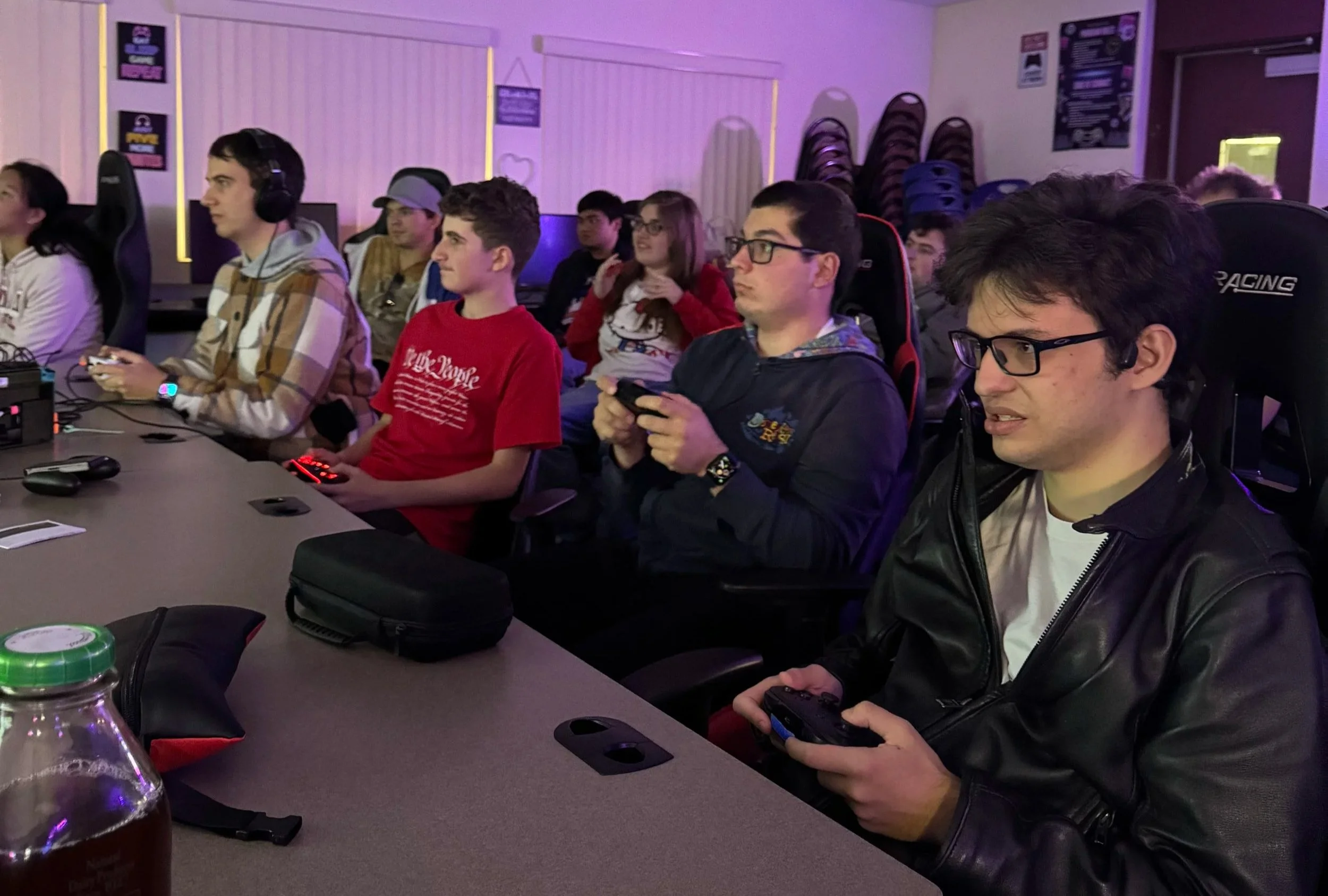
For many families, the phrase “video games” can bring up concern.
Too much screen time. Too much sitting. Too much isolation. Too many worries about whether gaming is helping or hurting.
Those concerns are understandable. Like any tool, video games need structure, supervision, balance + intention. But when used thoughtfully, video games can become much more than entertainment. They can become a bridge to friendship, confidence, communication, emotional regulation, physical movement, creativity + real-life skill development.
At the Unified Esports League, we see this every day.
For individuals with intellectual + developmental disabilities, video games can provide something deeply powerful: a shared language. A familiar interest. A safe entry point into teamwork. A reason to talk, laugh, try again, ask for help, celebrate someone else’s win, recover from a loss + feel like part of something bigger.
Research increasingly supports what many families, educators + coaches already see in practice: games can be used as structured tools for learning, connection + growth when they are guided by trained adults and paired with meaningful goals.
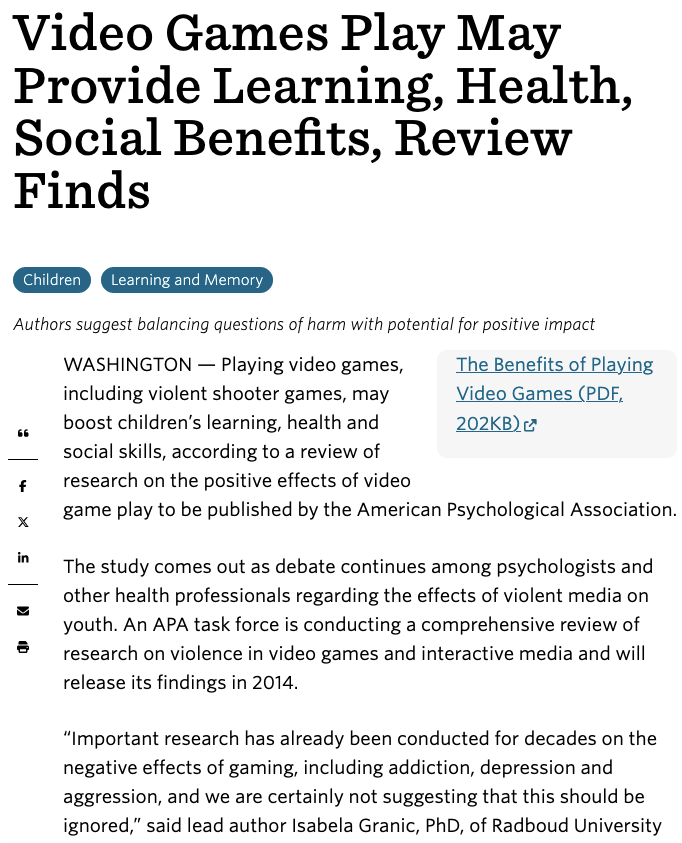
One of the most influential reviews ever published on this topic came from researchers writing in the American Psychologist, the flagship journal of the American Psychological Association. After reviewing decades of research, the authors concluded that video games can promote learning, health, social connection, motivation, emotional resilience, and cooperation when thoughtfully designed and used in balanced environments. Rather than viewing games as inherently harmful or beneficial, the researchers encouraged parents, educators, and clinicians to focus on how games are used and the environments surrounding play.
A 2024 systematic scoping review found growing interest in using games to support social skills training for autistic children + youth, especially when games are designed or facilitated to create intentional learning opportunities. Another review found that serious games were associated with improved adaptive + cognitive skills for children with intellectual disability or autism spectrum disorder, compared with control conditions.
That does not mean every game is helpful.
It means the environment matters.
At UESL, the goal is not simply to “play video games.” The goal is to use gaming + technology as a motivating, accessible, structured pathway toward personal progress.
Make it stand out
Whatever it is, the way you tell your story online can make all the difference.
Myth #1: “Video games are isolating.”
This is one of the most common misunderstandings about gaming.
In reality, many games are deeply social. Even when a game is played on a screen, the experience around it can involve communication, cooperation, leadership, patience, problem-solving + peer connection.
At UESL, clients do not just sit alone with a controller. They play on teams. They work with coaches. They practice taking turns. They cheer for one another. They learn how to win with humility + lose with resilience. They build friendships through shared interests.

For individuals who may struggle with traditional social settings, gaming can reduce the pressure of face-to-face interaction. Instead of starting with small talk, clients can start with a shared mission: choosing a character, solving a challenge, finishing a race, building a world, helping a teammate or celebrating a goal.
That shared focus can make connection feel more natural.
Myth #2: “Gaming does not teach real-life skills.”
A well-structured gaming environment can support many of the same skills families hope to see grow in daily life.
At UESL, video games are used to practice:
Communication | Teamwork | Turn-taking | Patience | Emotional regulation | Problem-solving | Strategic thinking | Sportsmanship | Hand-eye coordination | Confidence | Creativity | Leadership | Self-advocacy | Technology literacy
These skills do not stay inside the game. A client who learns how to ask a teammate for help may also become more comfortable asking for help at school, work or home. A client who practices calming down after a loss may build tools for handling frustration in other parts of life. A client who learns to celebrate someone else’s success may grow in empathy + peer connection.
Research on social skills interventions for individuals with intellectual disability has found that strategies including computer games of emotion regulation may help support communication, emotional recognition, emotional regulation + adaptive behavior.
This is the heart of UESL’s approach: gaming is the tool, but growth is the goal.
Myth #3: “Video games are always unhealthy.”
Unstructured, excessive screen time can absolutely become a concern. But healthy gaming is not the same thing as unlimited gaming.
UESL is built around the belief that a good gamer needs a healthy body + healthy mind. Our programs include structured routines, coaching support, health + wellness education, off-screen breaks, movement, breathing exercises, nutrition conversations, posture awareness + social-emotional learning.
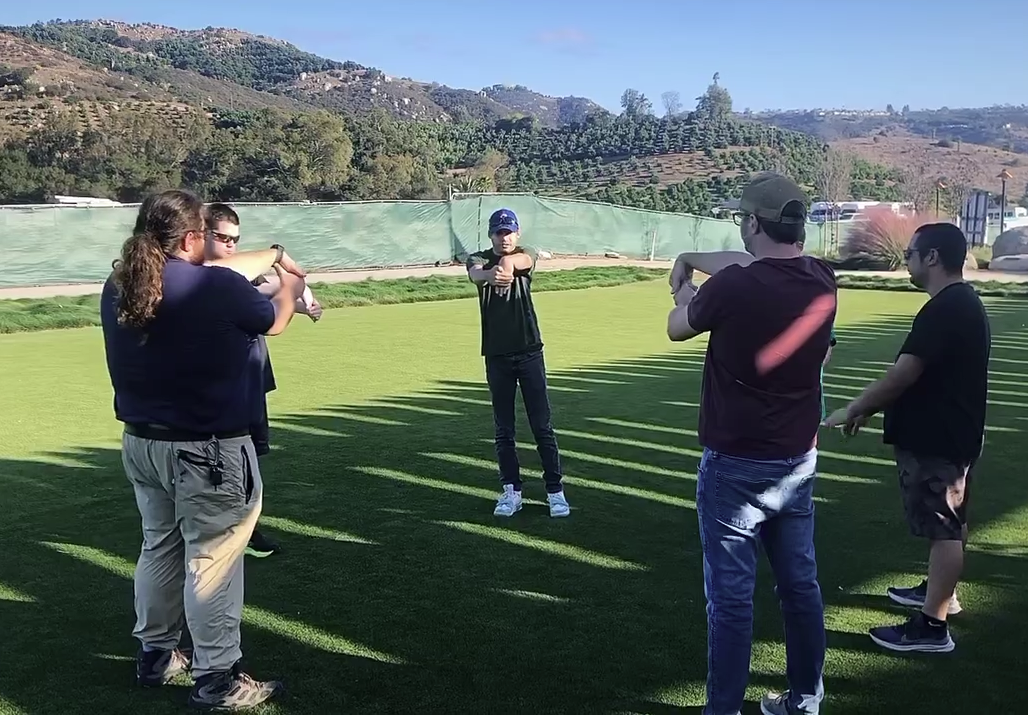
Active games, virtual reality and movement-based technology can also create opportunities for accessible physical activity. Research on exergaming for young adults with intellectual disability found that participants experienced physiological + psychological benefits during active gaming sessions. Research on VR-based physical activity programs for children with developmental disabilities has also shown potential benefits for motor skills, especially locomotor skills.
At UESL, we do not treat gaming as a replacement for movement, wellness or real-world connection. We use gaming as one part of a larger, balanced ecosystem of growth.
Myth #4: “Gaming is just a hobby, not education.”
Gaming can be a doorway into technology education.
Many clients begin with a love of video games, but that interest can grow into curiosity about coding, design, storytelling, digital art, virtual reality, streaming, sound design, photography, video production, simulation technology, esports careers + creative problem-solving.
UESL’s Technology Centers help clients explore gaming + technology in a supportive, IDD-informed environment. Our program includes opportunities to explore areas such as coding, virtual reality, graphic design, creative writing, storytelling, photography, videography + more.
For many individuals with special needs, this matters deeply. Technology can open doors to communication, independence, creativity + future opportunities. When clients are introduced to technology through something they already love, learning becomes more engaging and meaningful.
How UESL Uses Video Games With Intention
At the Unified Esports League, video games are never treated as “just screen time.”
UESL is a San Diego Regional Center approved vendor providing gaming + technology education for individuals with intellectual + developmental disabilities throughout San Diego + Imperial Counties. UESL supports SDRC clients ages 8 to adult, with IDD-trained coaches, secure Technology Centers + structured programming designed to support social + emotional growth.
Each client’s experience is guided by connection, compassion + personal goals.
UESL uses:
Individualized Technology Education Plans
1:3 coach-to-client support
IDD-trained coaching staff
Team-based gaming experiences
Structured health + wellness routines
Progress tracking + family updates
Off-screen activities
Accessible technology exploration
Opportunities for friendship, leadership + belonging
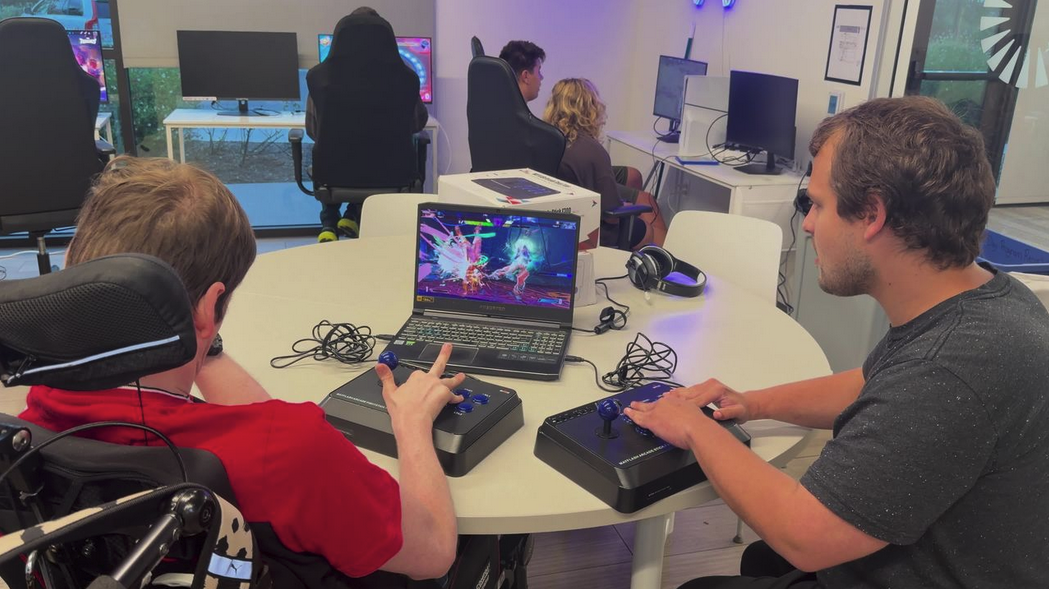
Every client is different. Some are working on communication. Some are building confidence. Some are practicing patience. Some are learning to tolerate losing without becoming overwhelmed. Some are making their very first friendships. Some are discovering creative or technical skills they did not know they had.
Gaming gives us the opportunity to meet clients where they are, then help them grow from there.
Research has also demonstrated that video games can produce measurable changes in the brain itself. In a landmark study published in Molecular Psychiatry, adults who played Super Mario 64 for approximately 30 minutes per day over two months showed increases in gray matter volume in brain regions associated with spatial navigation, strategic planning, working memory, and fine motor performance. These findings suggest that certain types of gameplay can function as meaningful cognitive training experiences rather than passive entertainment alone.
The Power of Belonging
One of the most meaningful parts of UESL is not the technology itself.
It is the belonging.
Clients are not just attending a program. They are joining a team. They get to be part of a shared identity, a shared routine + a shared community. They can walk into a Technology Center and know there are people who understand their interests, support their growth + celebrate their progress.
For many families, that kind of belonging is life-changing.
Video games often get blamed for disconnection, but in the right environment, they can do the opposite. They can bring people together. They can help clients practice friendship in a way that feels natural. They can create moments of joy, laughter, teamwork + pride.
That is why UESL believes gaming can be a powerful tool for growth.
Not because games are magic.
Because connection is powerful.
Because motivation matters.
Because every client deserves access to friendship, technology, teamwork + a community that sees their potential.
A More Balanced Conversation About Gaming
Families do not need another fear-based conversation about video games.
They need a balanced one.
Yes, gaming should be structured. Yes, screen time should be intentional. Yes, safety, supervision + wellness matter. But video games can also be meaningful, social, creative, educational + empowering.
The question should not be, “Are video games good or bad?”
The better question is:
How are they being used?
Who is guiding the experience?
What skills are being practiced?
Is the environment safe, supportive + balanced?
Is the client connecting, learning + growing?
At UESL, the answer is yes.
Explore More in The Portal
Want to learn more about the games we play, the technology we use + the ways UESL supports growth for individuals with intellectual + developmental disabilities?
Explore more resources in The Portal, including guides on healthy gaming, accessible technology, esports, client growth, family support, San Diego Regional Center services + innovative IDD programming across San Diego + Imperial Counties.
At the Unified Esports League, we believe video games can be more than play.
They can be a path to confidence.
A path to communication.
A path to wellness.
A path to friendship.
A path to belonging.
Let’s Level-Up Together.
REFERENCES
1. Video Games Play May Provide Learning, Health, Social Benefits, Review Finds https://www.apa.org/news/press/releases/2013/11/video-game
2. Games for Social Skills in Autism (Systematic Scoping Review)
https://pmc.ncbi.nlm.nih.gov/articles/PMC11816463/
3. Playing Super Mario induces structural brain plasticity: gray matter changes resulting from training with a commercial video game
4. Serious Games for Children with Intellectual Disability + Autism
https://www.sciencedirect.com/science/article/pii/S2212868922000228
5. Emotion Regulation + Social Skills for Individuals with Intellectual Disabilities
https://www.frontiersin.org/journals/rehabilitation-sciences/articles/10.3389/fresc.2022.968314/full
6. Exergaming + Physical Activity for Adults with Intellectual Disabilities
https://pmc.ncbi.nlm.nih.gov/articles/PMC8928788/
7. Virtual Reality Physical Activity for Developmental Disabilities
https://www.sciencedirect.com/science/article/abs/pii/S0891422222002165