Before the research caught up, many families already knew the truth.
For individuals with intellectual and developmental disabilities (IDD), video games were never just entertainment.
They were connection.
They were motivation.
They were the one place where confidence could grow naturally.
A controller could become a bridge to communication.
A cooperative mission could become a lesson in teamwork.
A moment of frustration could become a coaching opportunity for emotional regulation.
Today, more organizations, researchers, and accessibility leaders are recognizing what families have seen firsthand for years: video games and accessible technology can be powerful tools for growth in the IDD community.
Across San Diego and Imperial Counties, the Unified Esports League (UESL) is helping lead that movement — transforming gaming into a structured environment for life-skills development, community connection, and confidence building.
And for many families, that environment is life-changing.
The Growing Recognition of Video Games as Development Tools for the IDD Community
At their best, video games offer something many traditional programs struggle to create all at once: high engagement, clear feedback, repeatable practice, structured rules, and opportunities for connection.
A game can ask a player to take turns, read cues, solve problems, adapt to change, manage frustration, communicate with a teammate, recover from mistakes, and stay focused on a goal. Those are not “throwaway” moments. Those are developmental moments.
And unlike activities that may feel intimidating or inaccessible from the start, games often begin with something priceless: passion.
Passion opens the door. Once that door is open, growth can follow.
This does not mean every game is automatically beneficial, or that all screen time is the same. It means that when games are chosen intentionally and used within a supportive framework, they can become highly effective tools for practicing real-world skills in a way that feels engaging instead of exhausting.
That distinction is important. The value is not in “just more screen time.” The value is in purposeful play.
Research Supporting the Benefits of Video Games for Individuals with Intellectual and Developmental Disabilities
The research base is still evolving, but several professional reviews already point in a promising direction.
A 2021 systematic review of randomized controlled trials on videogaming and intellectual disability concluded that videogaming can be a useful therapeutic tool for improving physical and cognitive function in people with intellectual disability. The review found particular promise in exergaming for fitness and motor skills, while more sedentary game formats showed potential for stimulating cognitive function.
A 2024 systematic review focused on serious games for autistic individuals found similarly encouraging results in the area of social skills. After analyzing 26 studies covering 25 games, the review reported that a majority of measured criteria showed significant improvement, and most studies found significant gains in at least one social-skills outcome. The authors concluded that the findings strongly support the positive impact of computer-based serious game interventions for teaching social skills to autistic individuals.
A 2025 systematic review on digital motor interventions for individuals with developmental disabilities also found that digital technology can effectively support improvements in physical activity, fitness, motor performance, and cardiovascular performance, with exergaming identified as a promising route for individuals with IDD, including children with Down syndrome and autism spectrum disorder.
Taken together, these studies do not suggest that video games are a magic fix. But they do support something families and disability-centered programs have been observing for years: when gaming is used with intention, structure, and support, it can become a meaningful pathway for development.
Accessible Gaming Technology Is Expanding Opportunities for Players with Disabilities
This shift is not happening in theory alone. It is happening across the gaming, disability, and accessibility sectors right now.
In March 2025, the Entertainment Software Association announced the Accessible Games Initiative, a cross-industry effort designed to give consumers clearer information about accessibility features in games before they buy them. The initiative launched with 24 standardized tags, including features such as clear text, large subtitles, narrated menus, and save-anytime functionality. For families, educators, and disability service providers, this is a major signal that accessibility is no longer an afterthought — it is increasingly becoming part of the buying conversation itself.
Nonprofits have also helped push this evolution forward. AbleGamers describes its mission as improving quality of life for people with disabilities through the power of video games, while SpecialEffect emphasizes using modified controllers, eye-tracking, and other tools to help physically disabled players participate more fully — not just for fun, but for connection, confidence, rehabilitation, and quality of life.
That broader ecosystem matters. It shows families that gaming is no longer sitting outside the world of disability support. It is increasingly being recognized as part of it.
The Rise of Accessible Technology is Changing What’s Possible
One of the biggest reasons gaming has become more valuable in disability-centered spaces is the rapid growth of accessible technology.
The Xbox Adaptive Controller was designed primarily for gamers with limited mobility and functions as a hub for external buttons, switches, mounts, and joysticks, allowing players to create custom setups that fit their abilities. Microsoft notes that the controller was developed with input from organizations including AbleGamers, SpecialEffect, and the Cerebral Palsy Foundation.
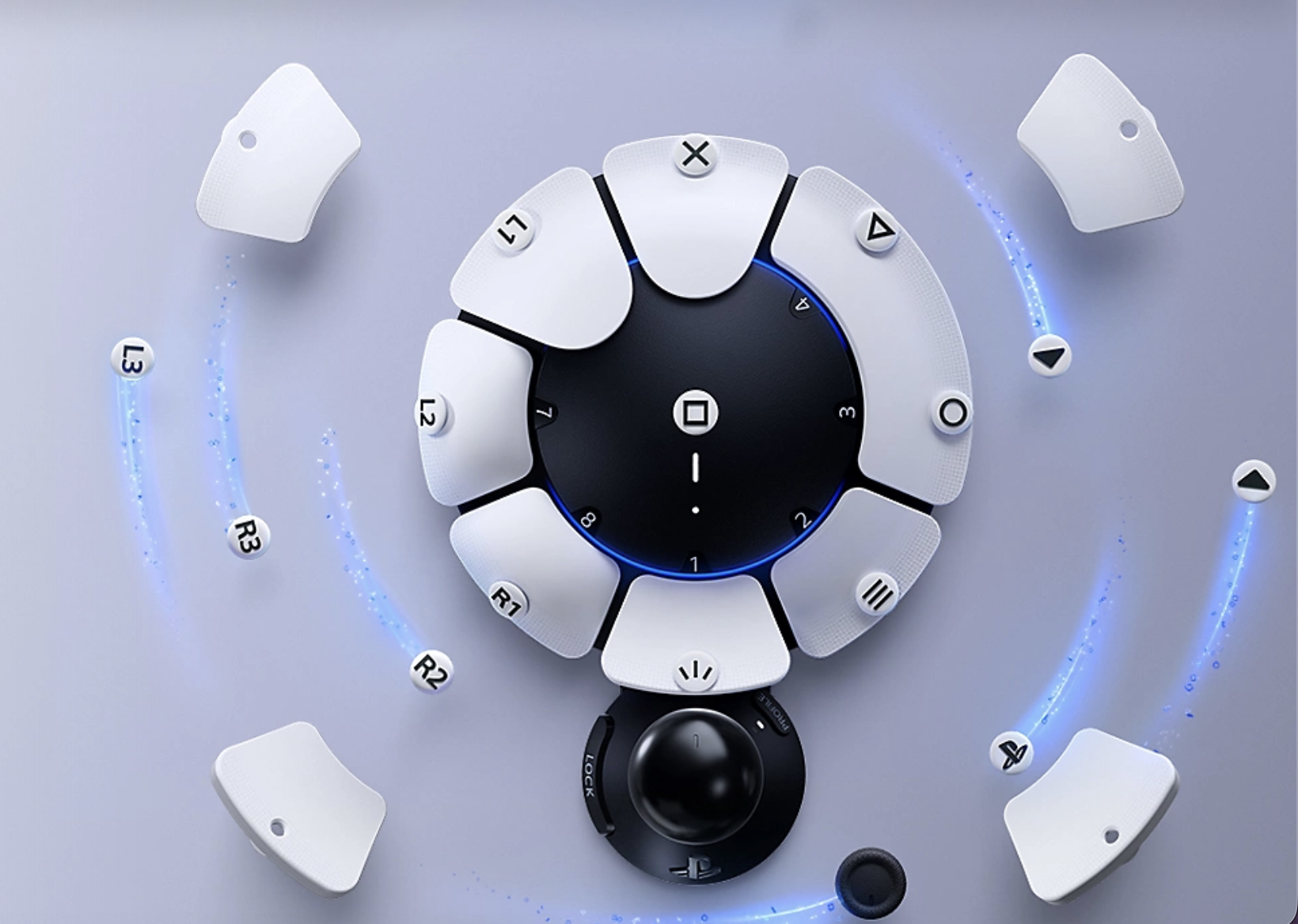
PlayStation’s Access controller reflects the same shift. Sony describes it as a highly customizable controller kit designed to make gaming more accessible, with swappable button and stick caps, adjustable stick length, 360-degree placement options, 3.5mm expansion ports for additional devices, and multiple custom control profiles.
These technologies matter because accessibility is not one-size-fits-all. A setup that works beautifully for one player may not work at all for another. Adaptive gaming tools allow programs, families, and support staff to meet the individual where they are — physically, cognitively, and emotionally.
That flexibility can transform frustration into participation.

Examples of Video Games That Support Skill Development
Not every game does the same thing. Different games open different doors.
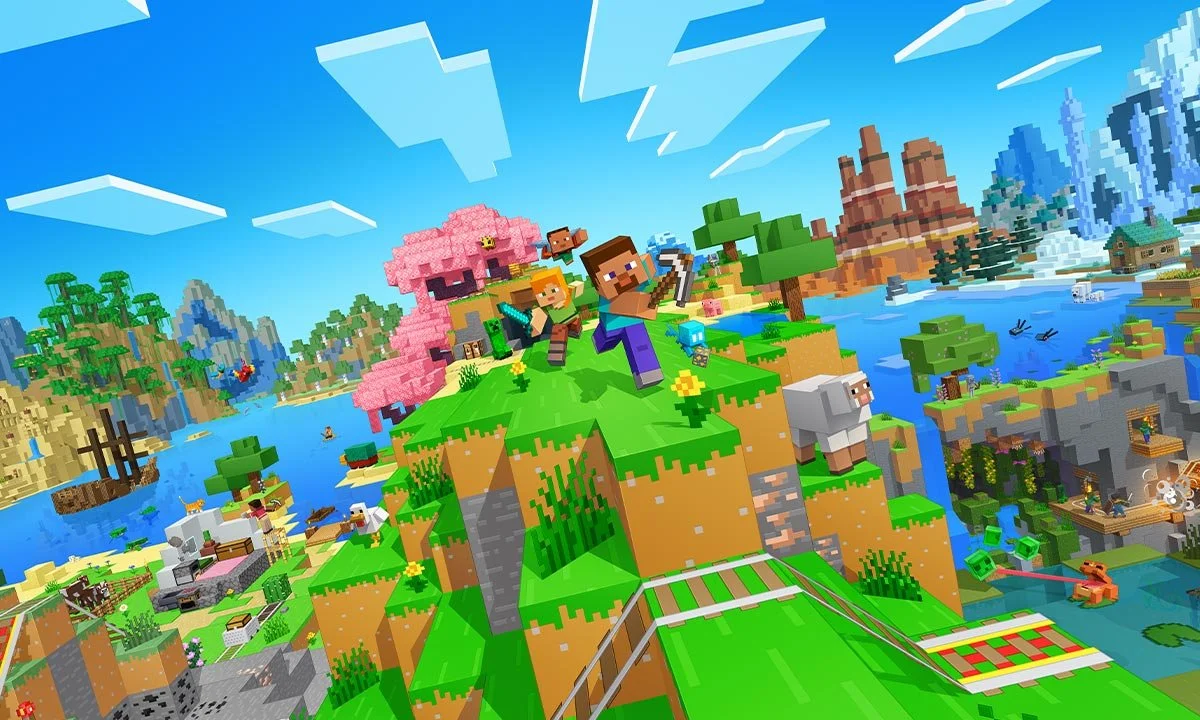
Minecraftis one of the clearest examples. Its open-ended, creative structure can support exploration, collaboration, planning, storytelling, and self-expression. It also includes a growing range of accessibility features, including text-to-speech for chat, keyboard menu navigation, captions, subtitles, and other settings across versions.
For some IDD players, Minecraft can become a low-pressure social environment where shared building projects create natural communication. For others, it becomes a space to experiment, create systems, practice persistence, and gain confidence through mastery.
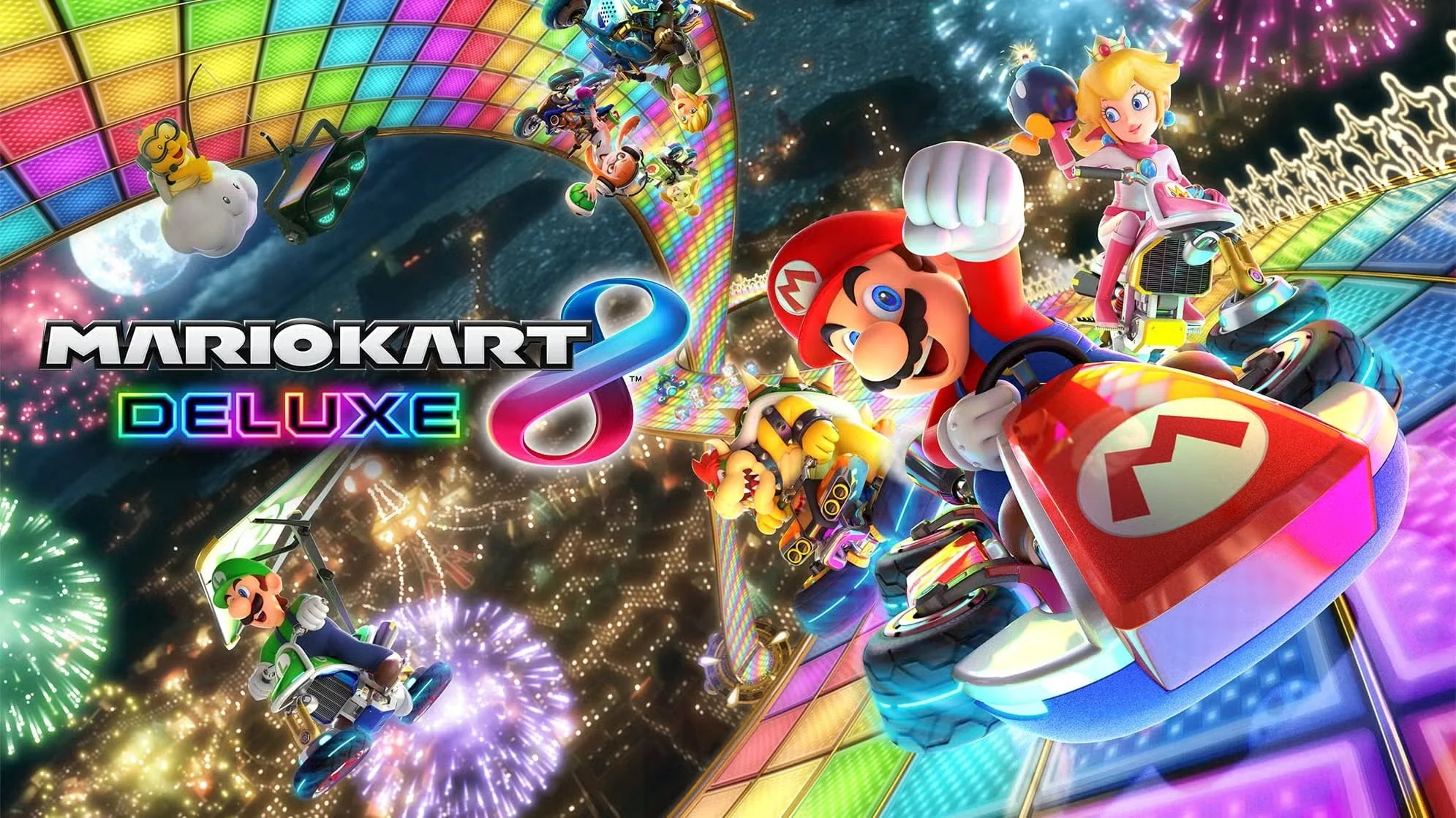
Mario Kart 8 Deluxe is another strong example, especially for newer or younger players or those who benefit from reduced motor demand. Nintendo highlights assist features such as Smart Steering and Auto-Accelerate, which can help players stay on course and lower the barrier to entry.
That matters because inclusion often begins with access. When a player can get into the game without being immediately overwhelmed by failure, they have more room to practice sportsmanship, turn-taking, attention, reaction time, and joyful participation.
Movement-based games can also be meaningful. Research on exergaming suggests potential benefits for physical fitness, physical activity participation, executive function, and self-perception in disability populations, especially when play is supervised and intentional.
In other words, the best question is not “Are video games good or bad?” The better question is: Which game, for which person, with what support, toward what goal?
That is where true innovation lives.
How the UNIFIED Esports League Is Transforming Gaming into Growth for the IDD Community
This is exactly where the Unified Esports League stands apart.
UESL is not treating video games as a passive pastime. UESL is using gaming + accessible technology as an intentional framework for growth, belonging, and life-skill development within a supportive IDD-centered environment.
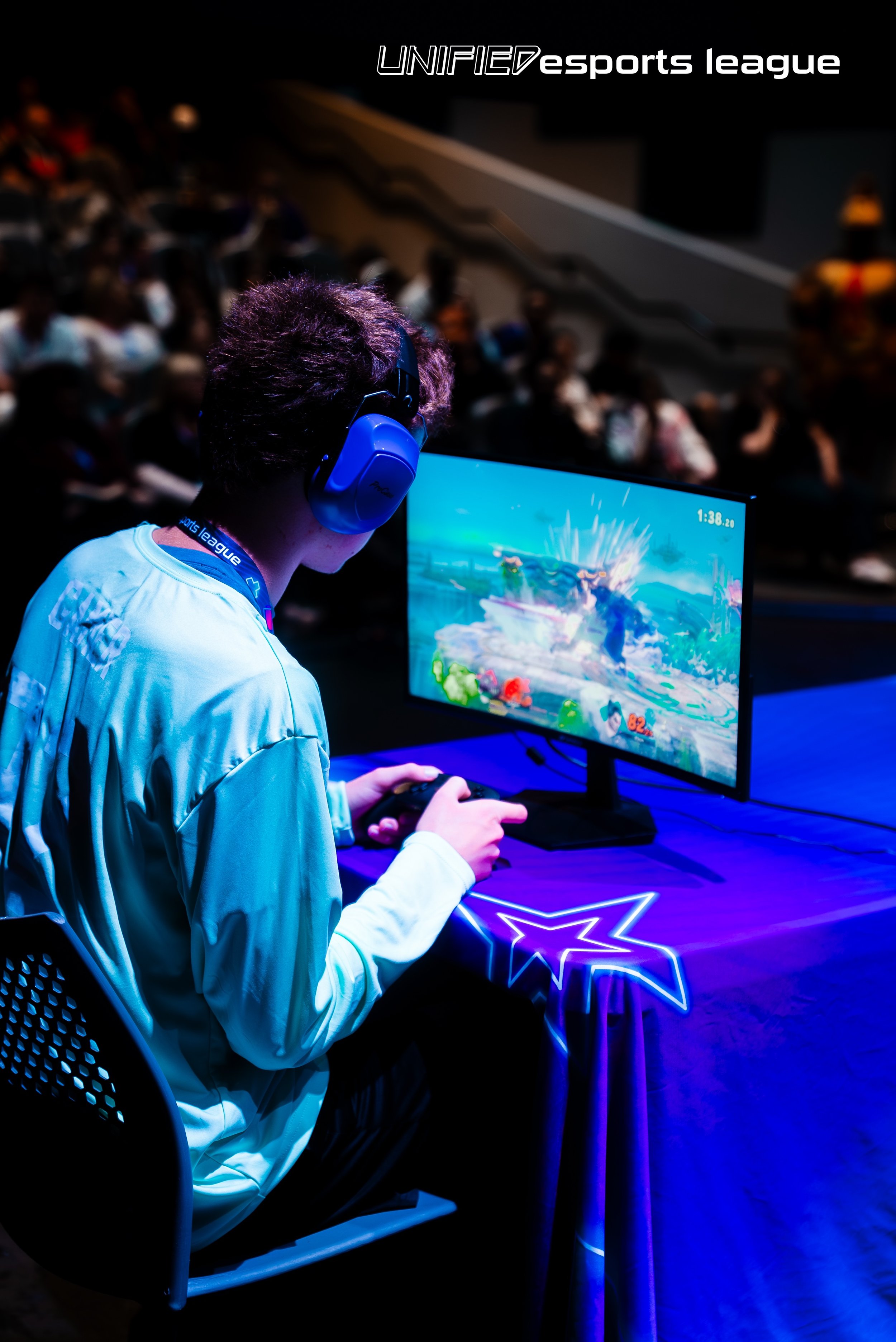
The value of gaming multiplies when a trained coach is present to guide the moment. A frustrating loss becomes an opportunity to practice emotional regulation. A multiplayer challenge becomes a lesson in communication. A favorite game becomes the entry point for relationship-building, persistence, problem-solving, and confidence.
The UNIFIED Esports League emphasizes team play, friendship, communication, collaboration, problem-solving, hand-eye coordination, motor-skill development, gaming + technology education, and health + wellness practices such as activity breaks, breathing exercises, posture reinforcement, mind-body awareness, nutrition, and fitness.
That is a radically different model than simply handing someone a controller and hoping for the best.
UESL is building structured environments where games are used as tools for development.
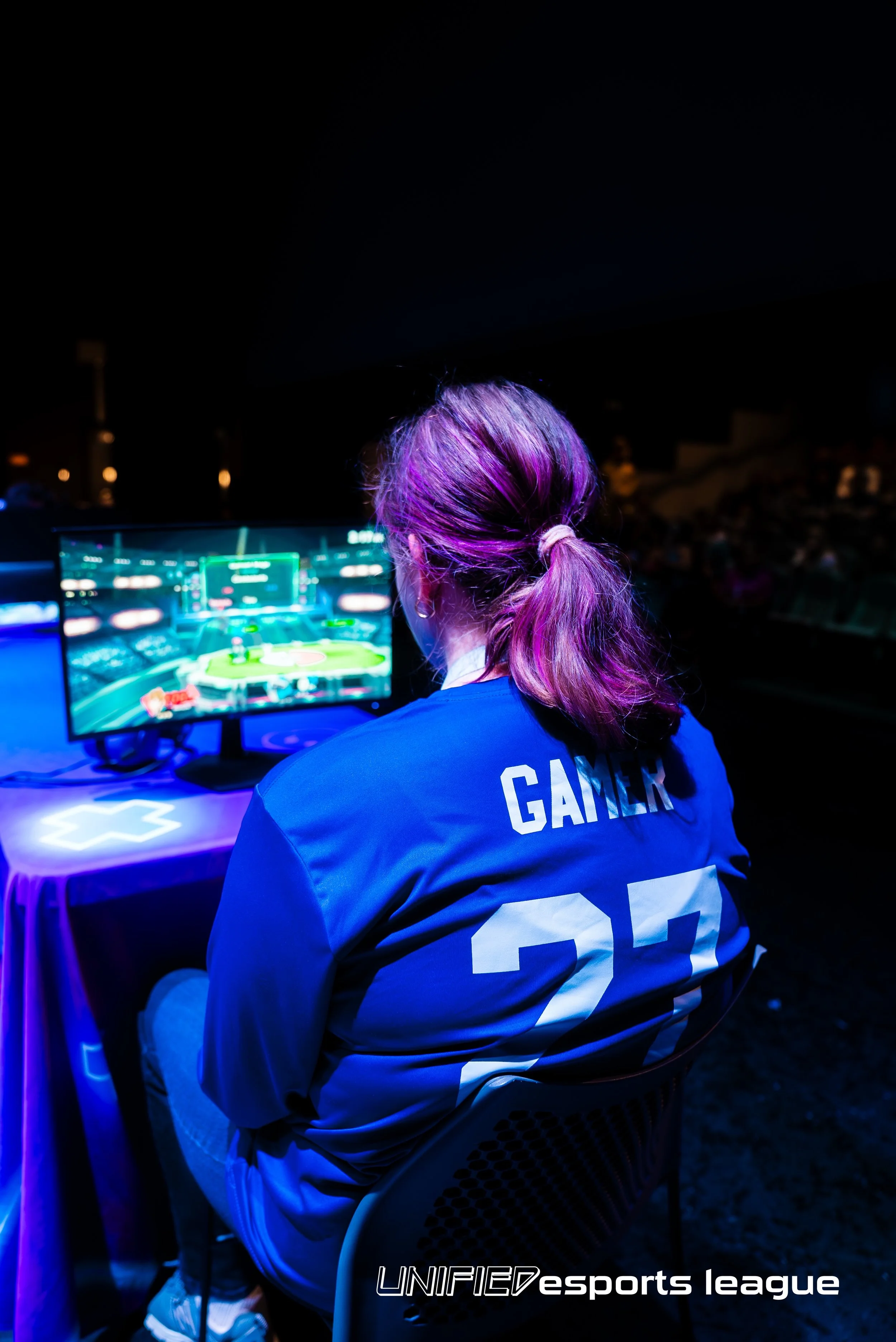
Across UESL’s UNIFIED Technology Centers in San Diego + Imperial Counties, these spaces as more than gaming rooms: they are team environments, routine anchors, and safe social spaces where IDD gamers can build friendships, practice communication, and discover what they are capable of when their passion for technology is taken seriously.
Growth often happens fastest when a person feels safe, seen, and genuinely excited to participate.
Why UESL Is Emerging as a Leader in Technology + Life Skills Programs for IDD Individuals
UESL’s innovation is not just that it uses games.
It is how those games are embedded into a larger ecosystem of support.
The UNIFIED Esports League combines:
coaching
routine
team identity
technology exploration
health + wellness
social connection
individualized growth pathways
family communication
SDRC-connected access
Leadership in this space is not just about having gaming equipment. It is about building an environment where interest becomes relationship, relationship becomes trust, and trust becomes growth.
UESL is helping pave a lane that many families have been searching for all along: a place where IDD individuals can find a supportive community that understands their needs, respects their passions, and knows how to guide them forward.
A Supportive Community for IDD Individuals in San Diego and Imperial Counties
The old stereotype says video games isolate.
But in the right environment, they can do the opposite.
They can connect.
They can motivate.
They can regulate.
They can empower.
They can help a person feel capable.
They can give someone a place to belong.
And as accessible technology continues to expand — with more adaptive hardware, more transparent accessibility information, and more disability-centered organizations championing inclusion — the future of gaming in the IDD community looks bigger, more thoughtful, and more hopeful than ever.
For families in San Diego + Imperial Counties, that future is not abstract.
It is already taking shape inside UESL’s UNIFIED Technology Centers.
Ready to Connect With UESL Client Services to Learn More
If your family has been searching for a supportive program where your loved one can build friendships, practice life skills, explore gaming + technology, and grow in a setting designed with IDD needs in mind, UESL Client Services is the best place to start.
The UESL Client Services team as a concierge support team that helps families learn more about the program, identify the right location, schedule a gaming center tour, ask questions, begin enrollment, and navigate the San Diego Regional Center authorization process.
In other words, they are not just there to answer a quick question. They are there to help families take the next step with clarity.
Whether you want to:
learn more about UESL’s gaming + technology program
find the best-fit location in San Diego or Imperial County
schedule a tour
ask about SDRC vendor access
understand how enrollment works
explore whether the program is a good fit for your loved one
…UESL Client Services can help guide you through it.